

I met a lot of people in my travels and when I was growing up in India (2017-2019). The best thing about travel for me is meeting the people, the sights in India are beautiful, the river, the lush greeness everywhere is breathtaking, but so are the Canadian Rockies. People are even prettier than anything I could ever see, but the sad part is everyone changes, and everything changes. I was walking home with my aunt, and she was telling me how unfortunate it is now that I’m leaving, and I told her what’s even more unfortunate is that her daughter (my cousin) moved away too. All the people I met in Goa, all the friends I made across the world, we shared a moment together, but then after that it’s gone, it doesn’t exist anymore. I can never see Mrs. Gibson or laugh about silly things like I did when I was in elementary. I can never go to Goa with Mable and be 21, and do 21 year old things. One thing I do understand is that life’s not about holding onto all these experiences and wishing you’ll feel the same way, it’s about appreciating all the moments you do have, everyday, every second. I’ll never get to drive a motorbike in India with my dad with no helmet on carrying a can of Petrol, and me with two Bondas on my left arm. These things will never happen again, but I want to appreciate these little moments more and more. These moments make up our life, the little things matter, because life is one big series of little things. The small little gestures, smiling, giving people hugs, being respectful, looking people in the eye when talking to them, all these little things make up a good life.
What I’m reading
I want to start off a new section where I’ll cover what I’m reading. I forget some of the cool things I read about, but if I share it here maybe I’ll remember more of it and my readers can learn too. This would also challenge my understanding of the book, since I’d be forced to explain it through my own logic. This is not meant to be a comprehensive summary or critical analysis on any book. It is simply my incomplete thoughts about topics I am trying to understand. If you get lost in my exploration, I’m probably lost too : )
The central goal of my reading is to understand myself and others, therefore I want to read wide. I want to be able to discuss things with experts that I come across. I don’t want to know every minusha of knowledge but I want a framework of knowledge that I can leverage to understand people better. For example, If I was talking to person X, I want person X to be able to talk to me without dumbing down their work too much. I want to be able to ask questions about their field and understand how it connects with everything else.
I read a great deal growing up, and I still try to read everyday. When I first gained a smidge of intelligence, I started reading a bunch of self help books. This was good at first, and I don’t think theres anything wrong with the category I’ve learnt quite a bit information especially surrounding the mentality you need in life ( a positive one!). Nowadays I’ve been really trying to diversify my reading, to try and fill in the gaps that I have in my knowledge, and specifically not try to read too much of one genre. The books I read last year were, Crime and Punishment, The Making of a Surgeon, Nicomachean Ethics, Fastlane Millionaire (second time), Lessons of History, Notes from the Underground and I listened to Autobiography of Benjamin Franklin, Poor Charlie’s almanack, Zen Mind Beginner’s Mind, Zero to One, Autobiography of Leonardo Da Vinci, The Creative Act, The Tao of Seneca. Totaling out to 7 books and 6 audiobooks, I gained more knowledge from the real books rather than the audiobooks, I don’t like counting the audiobooks as something I fully know because listening is too much of passive activity in my books, nonetheless great listens.
The best book I’ve ever read was Crime and Punishment, changed me as an individual, pushed me to write this post about truth. All the books I read last year were informative, specifically about philosophy and ethics.
However I must admit in the grand scheme of things, factoring in my studies as an engineer there are fields that I haven’t touched, and will probably never touch if I don’t read about them. I don’t know all my blind spots but one that I know exists is Biology. I haven’t studied a lick of biology since grade 10, and biology is cool, I love how organized it is with all species and such, specifically referring to taxonomy. I bought the Origin of Species by Charles Darwin, and that will be the book I’m reading for the next month or so.
Origin of species
I’ve finished the first two chapters Variation under Domestication and Variation under Nature.
To give some context, Darwin and everyone at the time, initially believed that all species were created different, meaning at the dawn of creation. There was a flamingo, dove, chicken, and many different birds and they were all separate, and will continue to stay seperate.
Darwin first saw this when he was on a voyage he noticed that in the same species of finches, on a certain island their beaks were poised to open nuts, while on an other they were better for preying on insects. This was a clue among many others that were some sort of adaptation going on. Darwin too was reluctant to believe this, in fact he wrote his entire book in secrecy, and spent many years preparing the defense so that when he would receive the backlash he could provide the evidence.
Chapter 1 : Variation under Domestication ( what I found interesting)
I didn’t dive into the evidence but all pigeons are said to come from one pigeon. Anyway that means that we all have one common ancestor, and I think that’s just so beautiful. There is the theory that we came from monkeys and I thought that was cool but even before that everything that is living came from one thing.
Variation under domestication basically says that we pick the animals/plants that are allowed to breed. Let’s take plants for example, plants that produce sweet and high yield fruits are chosen for the next generation of fruits, over a couple generations, the plants that had non-ideal characteristics that we chose would die off. To further illuminate this, this isn’t just something that started recently, even the early man could have influenced what plants continued and what didn’t.
This manifests both in plants as well as animals. Darwin uses pigeons as an example as pigeons have been domesticated and preserved for a very long time.
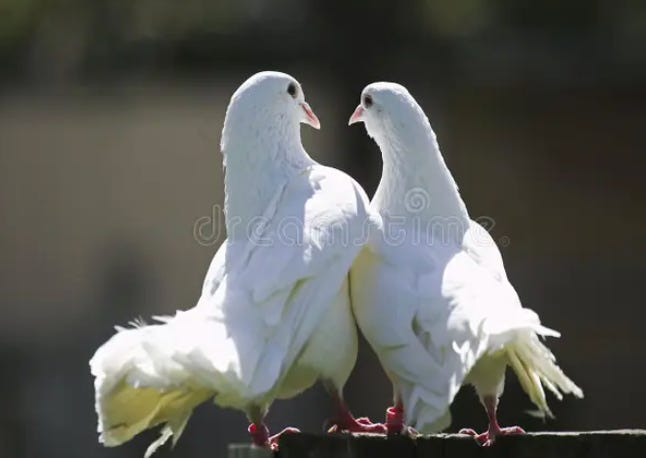
Take a look at the picture above, these pigeons have slight arc near their tail, this might have started as an even smaller arc, but through selectively breeding we can get a pigeon like below, with an even bigger arc.
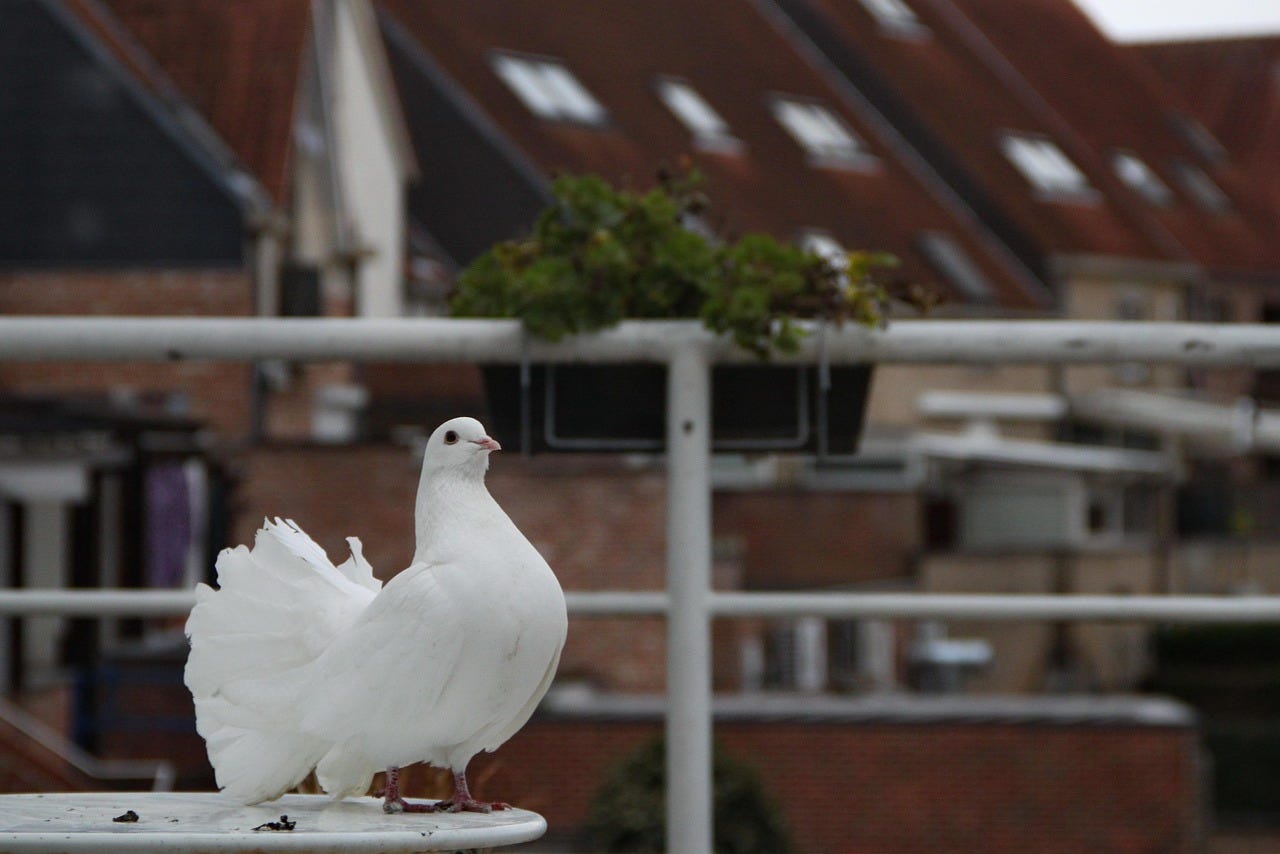
The man who first selected a pigeon with a slightly larger tail, never dreamed what the descendants of that pigeon would become through long-continued, partly unconscious and partly methodical selection.
Chapter 2 : Variation under Nature
This is what one would expect to happen due to nature itself imposing certain checks upon the species, this chapter also went into the genus of animals as well, which is the family of species. For example the lion, tiger, and jaguar are all part of the genus called Panthera.
I found it especially interesting how there isn’t a set standard to standardize species from varieties. Species within large generes (plural of genus) resemble varieties rather than species. This whole chapter was basically saying you it’s hard to differentiate between varieties and species, especially within a large genus.
Terms
Taxonomy is the branch of science concerned with classification, especially of organisms; systematics
Incipient : beginning to exist , a new species is incipient